



今日上海
上海大歌剧院:城市最新文化瑰宝 - 2026年06月24日
Shanghai Grand Opera House: the city's newest cultural marvel
The architectural form of the Shanghai Grand Opera House was revealed on June 23 in its entirety for the very first time, officially setting the countdown to its grand opening into motion.
Nestled along the banks of the Huangpu River and adjacent to the lush Expo Culture Park, the massive 146,000-square-meter complex is a breathtaking addition to the city's skyline. Designed not just as a performance venue but as a welcome public space, the opera house trades exclusivity for accessibility.
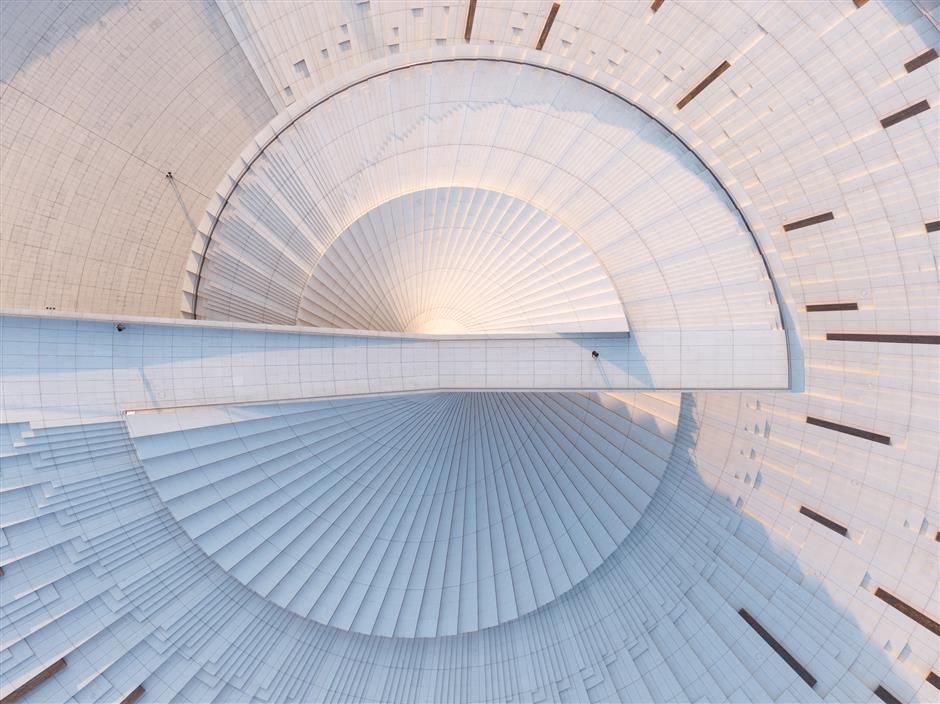
Its signature outdoor feature – a sweeping double-spiral staircase resembling a traditional Chinese folding fan – connects the ground level directly to the roof. This creates a sprawling 10,000-square-meter public observation deck where visitors can ascend to take in panoramic views of the river, the park, and the urban horizon, completely free of charge.
The unfolding fan: Where architecture meets nature
The building's sweeping roof radiates outward from the central spiral staircase, mimicking a Chinese fan slowly unfolding around its pivot. This elegant motif stretches from the exterior directly into the interior spaces, blurring the line between the indoors and the outdoors.
Guided by a philosophy of openness, the highly transparent lobby faces the riverfront and the park, maximizing the intake of natural light. Rather than being isolated in a dark theater, guests will be immersed in the shifting light of different weather conditions and seasons, allowing nature to become an integral part of the building's dynamic architectural rhythm.
Setting the stage: Asia's first "six-grid" technological marvel
Beneath the stunning exterior lies a powerhouse of theatrical technology. The Shanghai Grand Opera House features Asia's very first "six-grid" stage layout equipped with a bi-directional drive system. The interior is masterfully divided into four core areas – Soar Theater, Grand Atelier, Open Stage, and the Harmony Hall – which cleverly spell out the acronym SGOH. Together, they cover a complete performing arts ecosystem, from classical resident operas to avant-garde experiments and public art education.
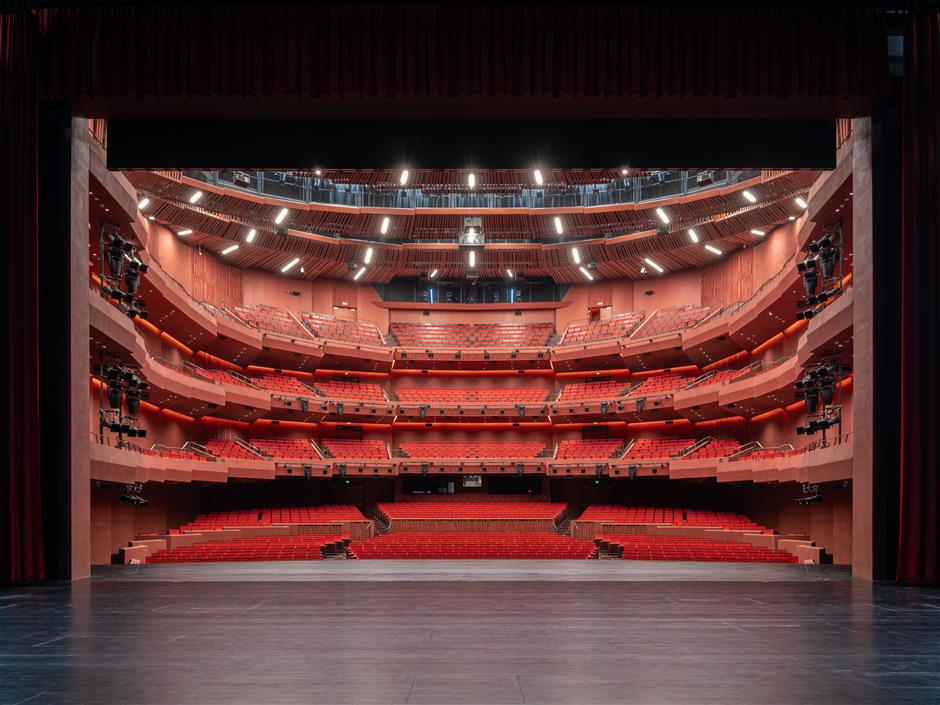
Stepping into the 2,000-seat Harmony Hall, visitors are immediately struck by its solemn and elegant "China red" aesthetic. As the crown jewel of the complex, it boasts Asia's largest theater stage at approximately 3,500 square meters. The mechanical brilliance of its bi-directional stage allows for rapid scene switching; while one production is performing, sets and props for the next can be actively loaded in. This unprecedented efficiency means the hall can host up to four different massive productions in a single week.
For a more intimate experience, the 1,200-seat Soar Theater serves as the premiere venue for original local drama, dance, and traditional Peking Opera. Designed with a classic horseshoe layout, it perfectly balances modern technical adaptability with historic theatrical charm.
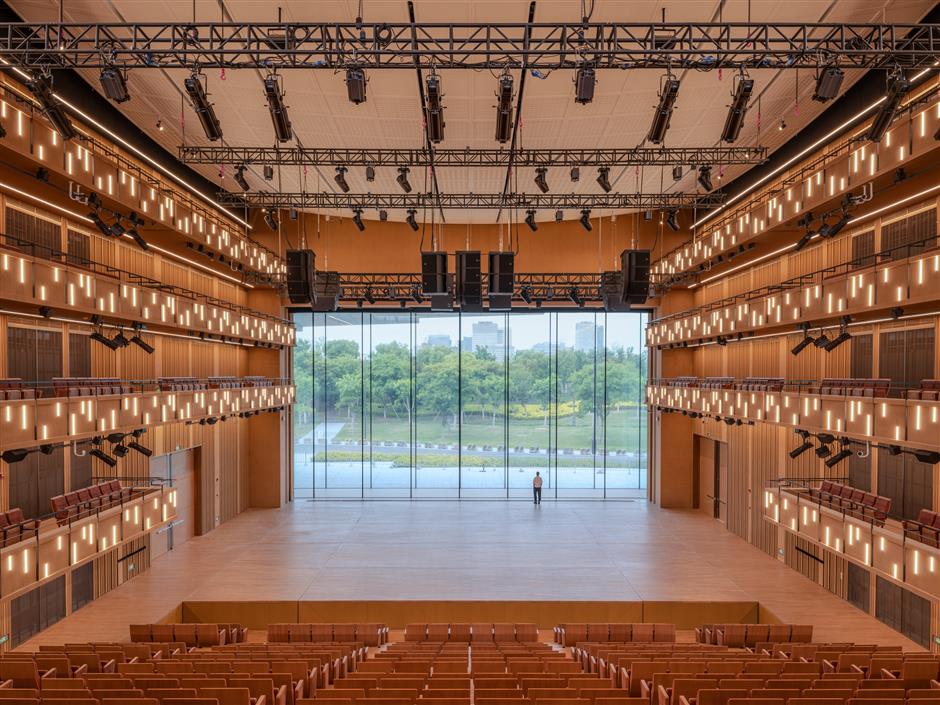
Perhaps the most visually striking interior space is the 1,000-seat Open Stage. Defined by its concept of a "borderless space," the hall is anchored by a nearly 13-meter-tall panoramic glass wall that invites the lush greenery of the surrounding park directly into the theater. Utilizing 21 individual seat elevators, the room can physically transform to suit anything from traditional chamber music to fully immersive, experimental theater.
Completing the quartet is the Grand Atelier, an interactive hub dedicated to masterclasses, film screenings, and community arts education.
The building as the instrument: acoustic perfection
The true magic of an opera house lies in its sound, and the acoustic design of the Shanghai Grand Opera House seamlessly blends art with cutting-edge engineering. Adopting the philosophy of "the building as the instrument, acoustics as the strings," every material detail has been meticulously curated.
Because the spatial geometry of the Harmony Hall is incredibly complex, the acoustic team built a 1:10 scale physical model to hunt down and eliminate any harmful echoes. During testing, the model was filled with nitrogen, and mannequins dressed in felt were placed inside to simulate the exact sound absorption of a sold-out audience.
Even the aesthetic choices serve a dual purpose; throughout the venues, the seamless, pore-less wall panels maintain top-tier sound absorption without compromising the sleek visual design. The result is a profoundly quiet listening environment that meets the highest world-class acoustic standards.
After a meticulous six-year journey from groundbreaking to completion, the Shanghai Grand Opera House stands ready. It is not just a triumph of engineering and design, but a bold new chapter in Shanghai's cultural legacy.
Source: City News Service
